Canine Care
Real advice on the best way to care for your dog’s teeth
As a dog groomer we offer canine brushing as a service. A client told me her previous groomer had a special way to clean her dog’s teeth so I went searching to find out how we can offer the same in our salon. I came across Sydney Pet Dental group and found they were likely a good resource and their blogs are fascinating. Here is there article.
Toothbrushing is THE most effective way of keeping your dog or cat’s mouth clean and healthy – this is why dentists recommend it for us! Contrary to popular belief, many pets can be trained to accept (and even enjoy!) toothbrushing. While starting when they are young is always good, even older pets can learn to love the brush if you take the ‘slow and sneaky’ approach.
TOOTHBRUSHING:
The Slow & Sneaky Method in 3 Easy
STEPS
Toothbrushing is THE most effective way of keeping your dog or cat’s mouth clean and healthy – this is why dentists recommend it for us! Contrary to popular belief, many pets can be trained to accept (and even enjoy!) toothbrushing. While starting when they are young is always good,even older pets can learn to love the brush if you take the ‘slow and sneaky’ approach.
What do I need?
1. Fingers
2. Pantyhose (cheaper ones that are rougher rather than silky smooth)
3. Toothbrush (appropriate size, with soft bristles)
Do I need toothpaste?
Not necessarily. Pet toothpaste helps remove plaque as it is mildly abrasive, and can make brushing more enjoyable as it comes in different flavours such as beef, chicken, tuna or even cheese. Alternatively, you can use oral antiseptics designed for pets to enhance plaque control. If your pet doesn’t like any of these options, you can even use water, as most of the plaque removal is done by the brush itself.
NOTE — Don’t use human toothpaste, as it is not designed to be swallowed, and it is very hard to teach a cat or dog to ‘rinse and spit’.
Before we start:
1 If you are unsure whether your pet has dental disease, have a dental check with your vet. You want to have any uncomfortable issues treated first so that you don’t cause pain when handling your pet’s mouth.
2 Make sure your pet is relaxed and comfortable. It is easier to sneak up on them if they are snuggling on your lap, or being cuddled by you or another person.
3 Keep sessions brief and positive. Start form the side and build up from one or two teeth to many over a few sessions. You may be able to jump through to using a brush on the first day, or it may take several sessions for each of the three steps – every pet is different so let them set the pace.
4 Don’t force things if your pet resists – pretend it was a mistake (‘oops’, ‘my bad’) and go back to cuddling and stroking their face before slipping the finger, pantyhose or brush back in.
End the session if they have had enough!
IT’S EASY AS 1…2…3…
Step One — Fingers:
Start by using just your fingertips to stroke or rub your pet’s face and cheeks. Gently slip a finger under the lips and rub softly along the teeth and gums. Stop if your pet resists, and try again gently when they are relaxed again. Give a reward at the end of the session – a walk, extracuddles and praise, a game or even a treat. A chew treat or even a full meal is fine aNer brushingas it is plaque that causes periodontal disease, not food. Of course, avoid sugary treats!
Step Two – Pantyhose:
Once your pet accepts your fingers rubbing the teeth, take it up a level by wrapping a piece of pantyhose around your finger. This makes it slightly more abrasive. Repeat the process as for Step One.
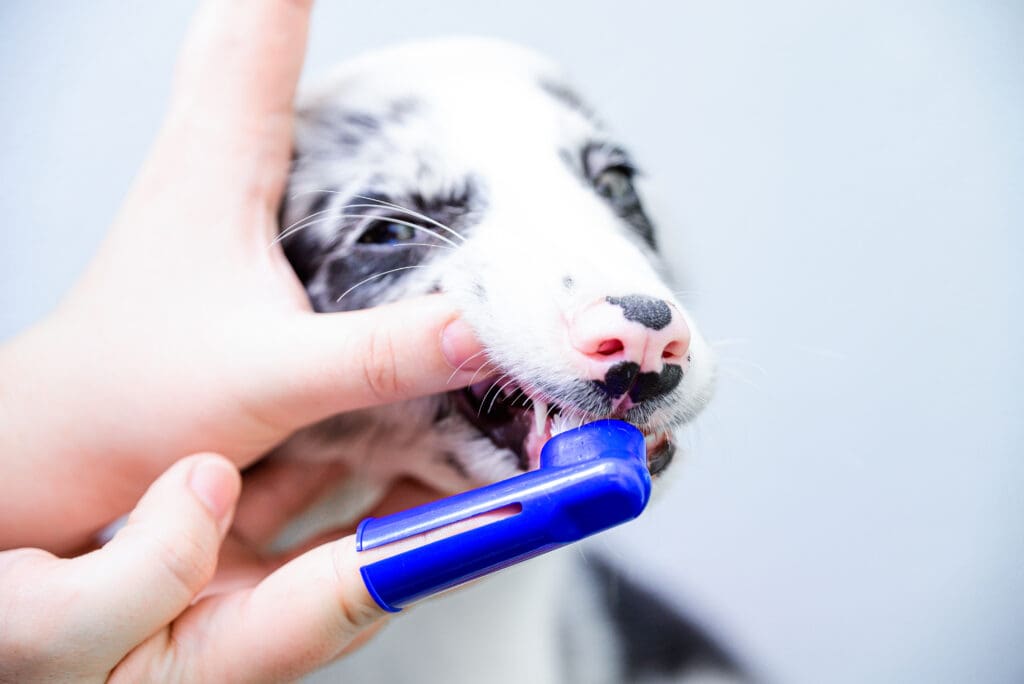
Step Three – Brush:
It’s time to try a soft toothbrush. To clean under the gumline, angle the bristles towards the gumline at about 45°. Don’t worry if you can’t brush the insides of the teeth (this is a game–breaker for most pets) as most of the plaque is on the outside surfaces. If the back teeth are really hard to reach with a brush, you can always use pantyhose around a finger to get into these tight areas.
A final note:
Regular dental care provided by veterinary professionals is essential for several reasons:
- Preventative Care: Routine dental cleanings and examinations can help prevent dental problems before they develop into more serious issues.
- Pain Management: Dental diseases such as periodontal disease can cause pain and discomfort for pets. Oral veterinary services can help alleviate pain and improve your pet’s quality of life.
- Systemic Health: Dental concerns in pets can lead to systemic health issues, including heart disease, kidney disease, and respiratory infections. By addressing oral health issues promptly, you can help prevent these potentially life-threatening conditions.
- Long-Term Health: Investing in your pet’s oral health can contribute to their overall health and well-being, helping them live longer, happier lives.
Thanks to Christine Hawke and Sydney Pet Dentistry for allowing me to use this blog.